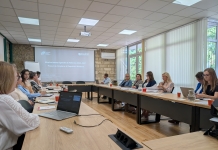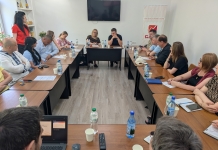
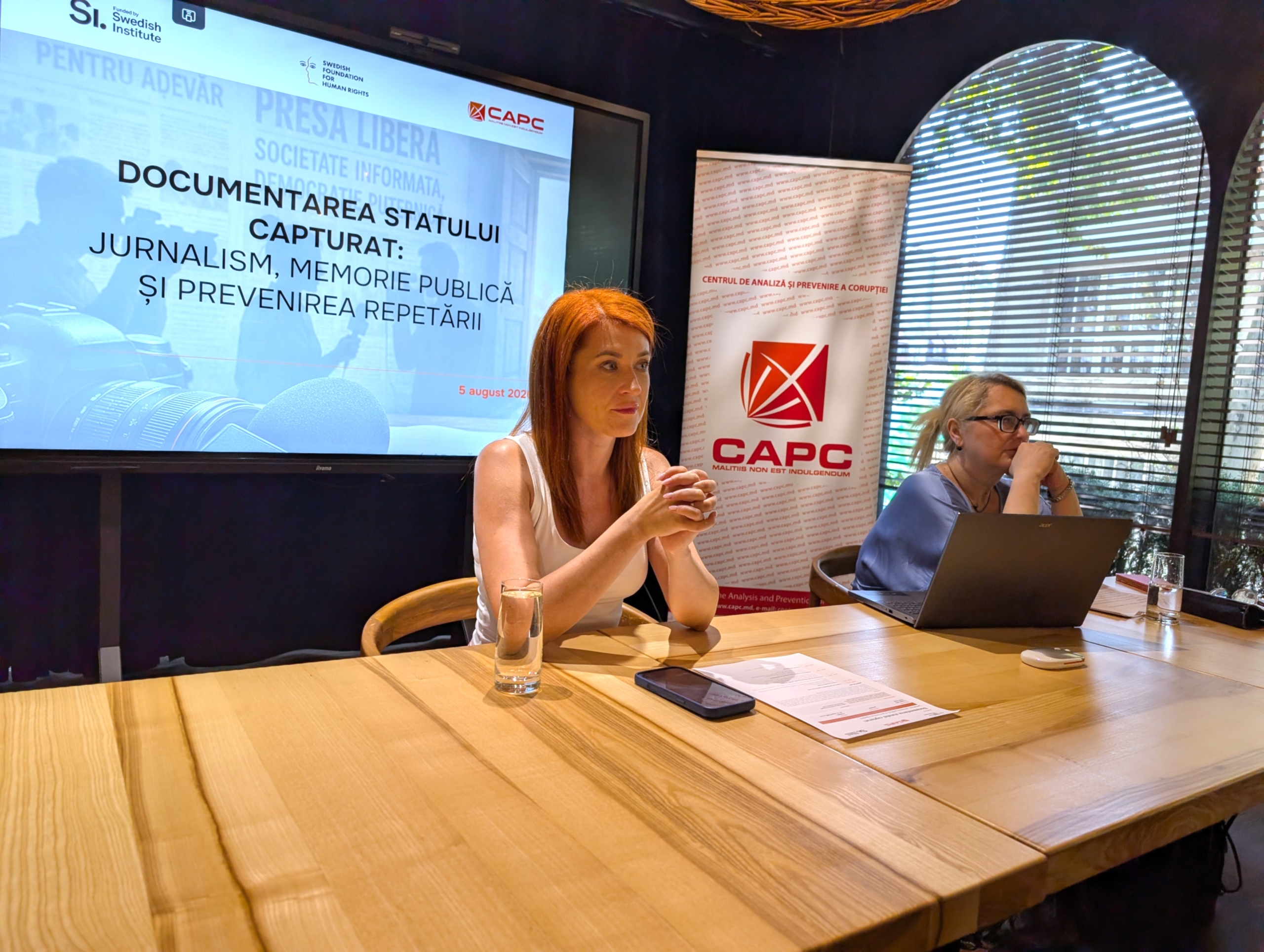
Transitional justice and the role of the media in documenting a captured state were key topics at the workshop organised today by the Centre for Analysis and Prevention of Corruption (CAPC). The event brought together journalists keen to understand how they can contribute to building public memory and preventing the recurrence of abuses.
What transitional justice means, what its mechanisms are, how the captured state fits into this concept and, most importantly, how the press can bring such issues back into the spotlight – these are questions to which the journalists found answers.
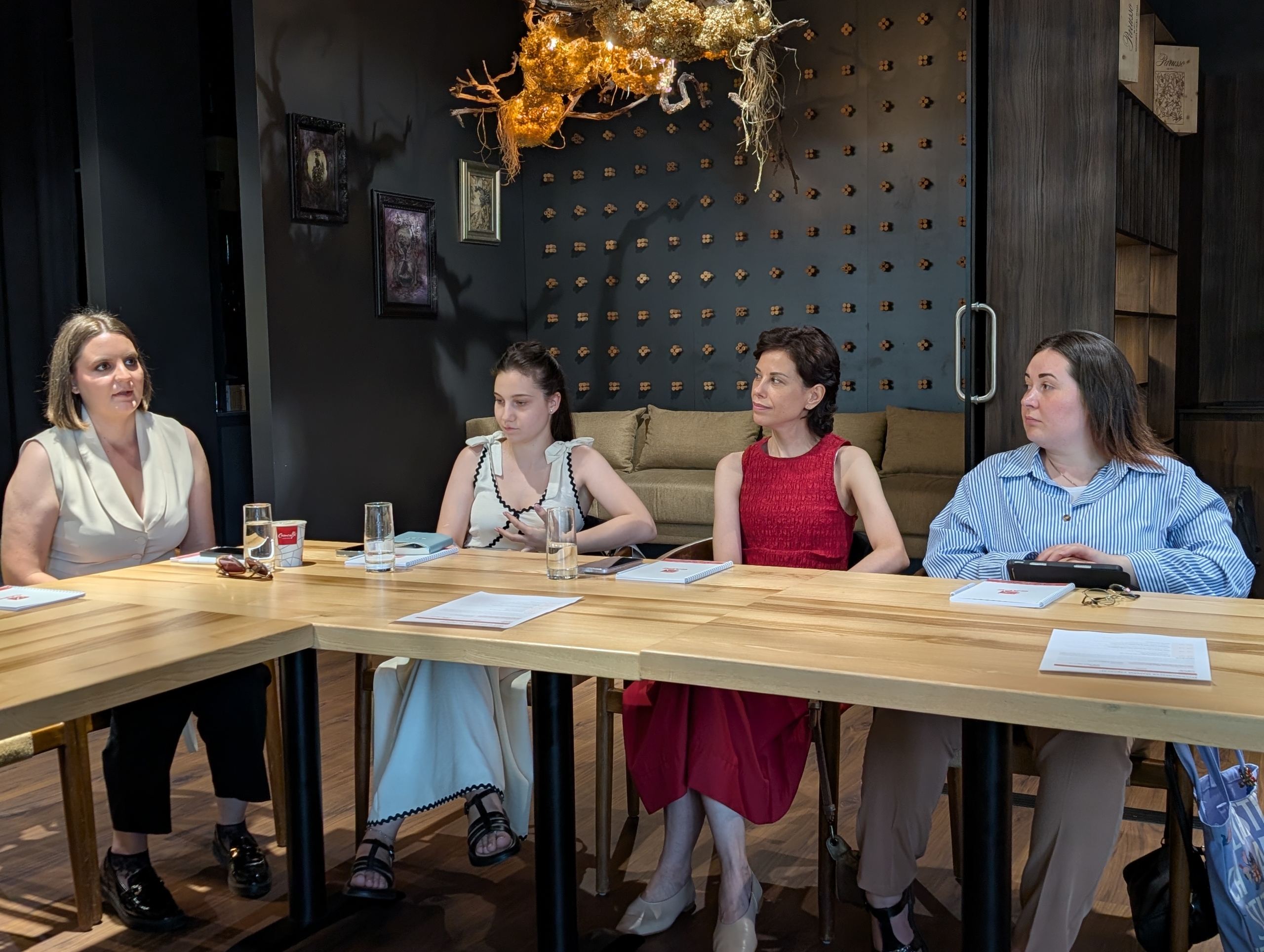
The workshop, entitled „Documenting the captured state: journalism, public memory and preventing recurrence”, was led by CAPC Chair Galina Bostan and investigative journalist Mariana Rață. The concepts of transitional justice and the captured state were thus addressed from both a legal and a journalistic perspective.
Galina Bostan explained to the journalists that transitional justice is not quite what the term „transition” suggests: „Transitional justice encompasses mechanisms through which a society seeks to deal with the legacy of serious and systematic human rights violations following armed conflicts, dictatorships or authoritarian regimes. The aim of transitional justice is not only to punish the perpetrators, but also to rebuild trust in state institutions and prevent the recurrence of abuses.”
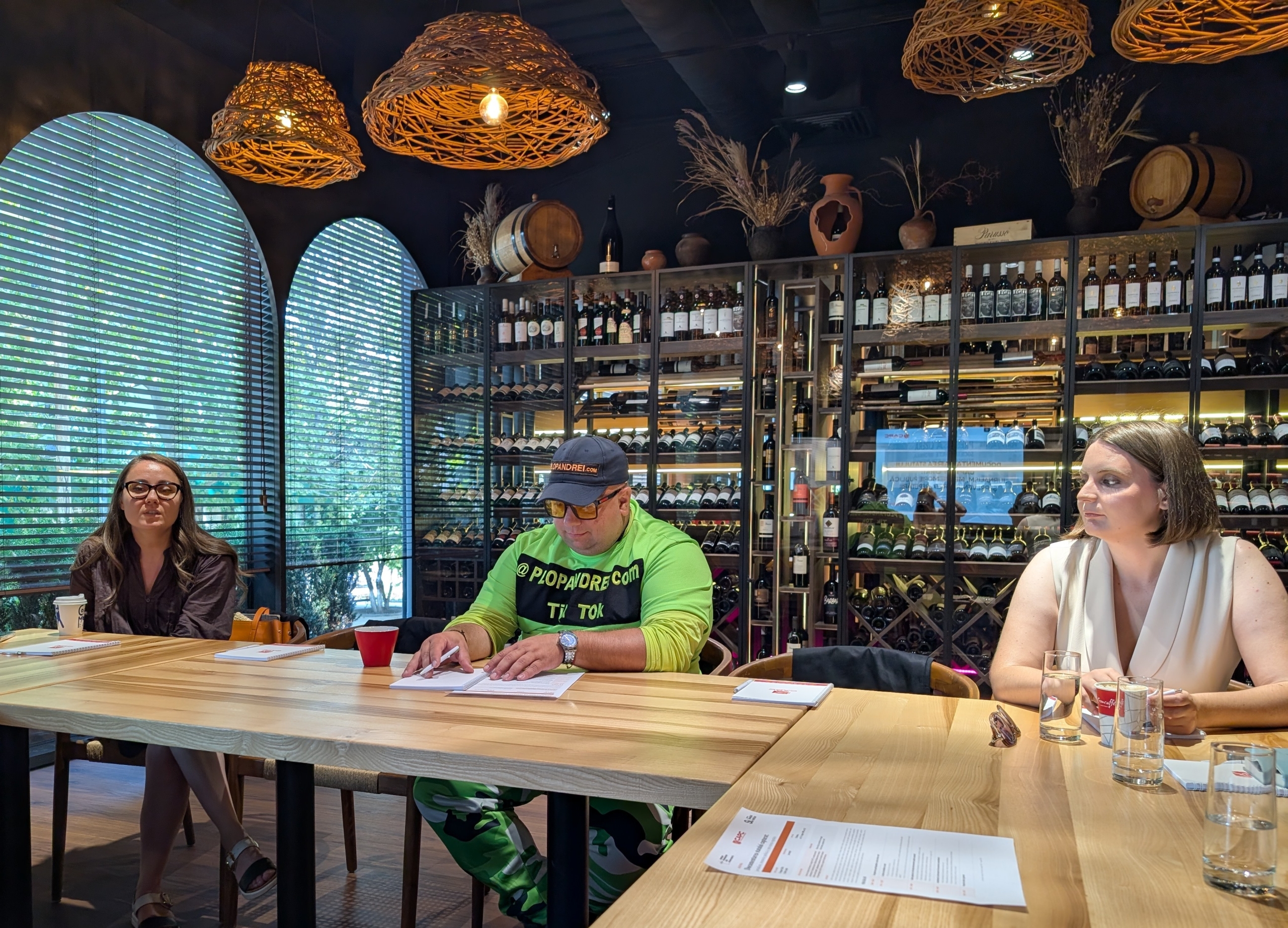
With over 20 years experience in journalism, having written numerous articles on the captured state, Mariana Rață spoke about the role of the press in documenting the captured state and about journalists responsibility to transform facts and testimonies into public memory: „Journalism does not merely provide real-time information — it creates the archive from which history is written. Historians, researchers, courts (including the ECHR), and commissions of inquiry often rely on the press of the time as a primary source. A captured state is documented through various means — in-depth investigation, TV programmes, journalistic follow-up, and cultural memorialisation — each with its own rules and risks.”
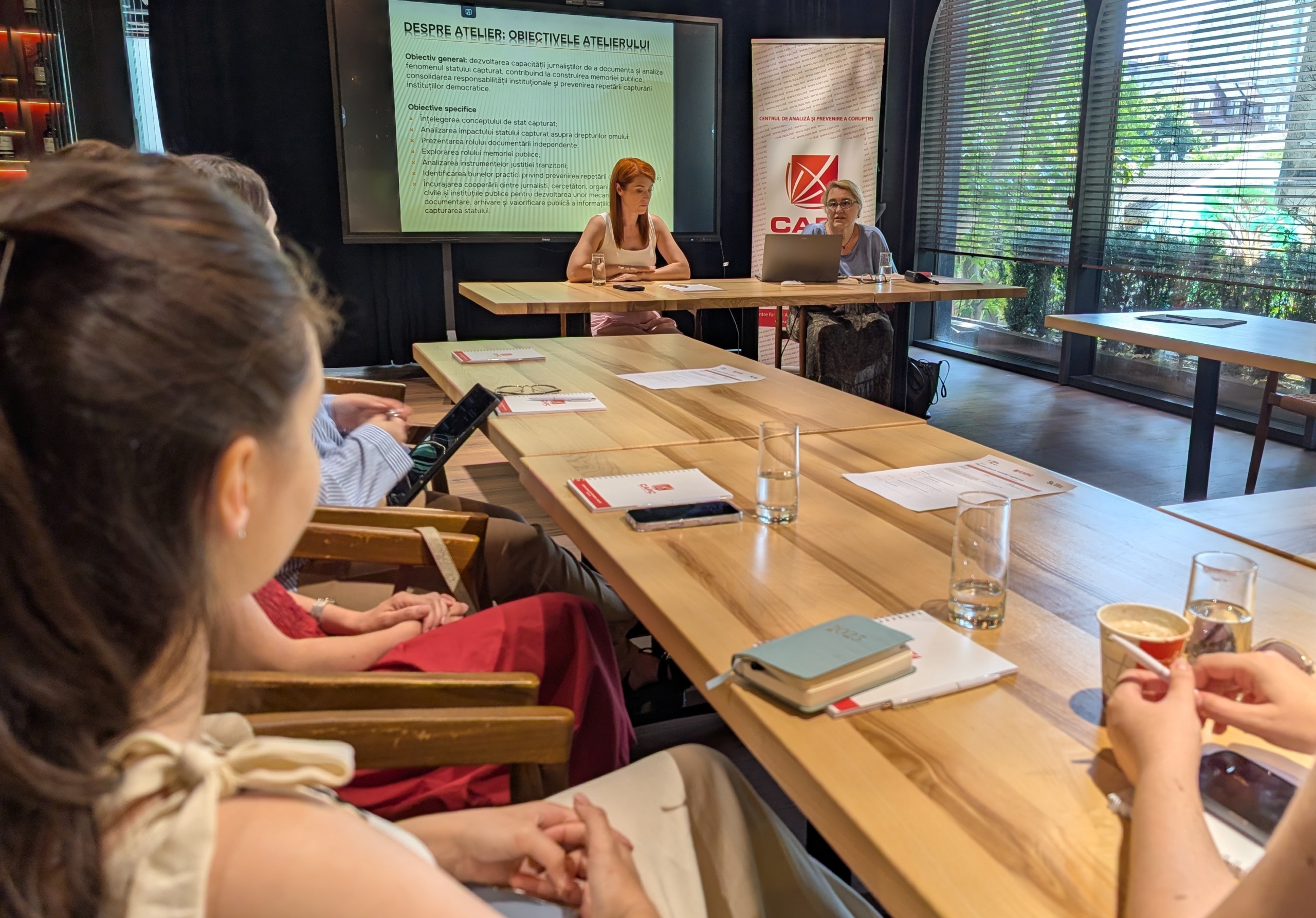
The workshop focused on the construction of public memory, guarantees of non-repetition and structural reforms, with journalism serving as an essential tool for documentation and public reflection.
It was organised as part of the project „Partnership for Transitional Justice: Building Bridges between Armenia, Moldova and Sweden’” implemented by the Centre for Analysis and Prevention of Corruption (CAPC) in partnership with the Swedish Foundation for Human Rights and the Armenian UN Association. This project is funded by the Swedish Institute.